Blog / Yoga
YogaHow Yoga Regulates the Nervous System (The Science)
The benefits of yoga are not mystical. They are neurological. This is what happens in your brain and nervous system during a well-sequenced class, and why some classes work better than others.
Isabel Maria Jeworski
January 2026 · 8 min read
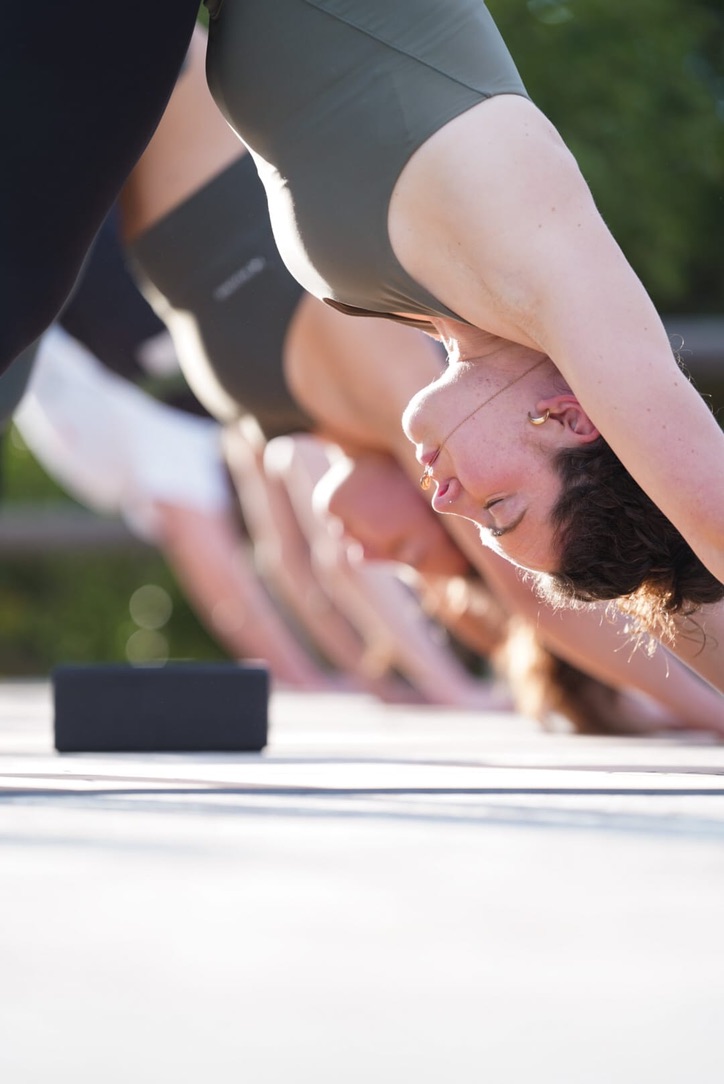
Most people come to yoga for the physical benefits. Better flexibility, a stronger core, some relief from back pain. And those things are real. But they are almost beside the point when it comes to why yoga has such a consistent and measurable effect on stress, anxiety, and overall wellbeing.
The reason yoga works so reliably has nothing to do with spirituality or ancient wisdom, though both have their place. It has to do with the autonomic nervous system, and the specific ways that yoga interacts with it.
The autonomic nervous system: a brief primer
The autonomic nervous system (ANS) controls all the body functions that run without conscious direction: heart rate, digestion, breathing, immune function. It has two primary branches.
The sympathetic branch mobilises the body for action. Heart rate increases, blood flow shifts to the muscles, digestion slows, and stress hormones are released. This is the fight-or-flight response. It is not bad. It is essential. But when it is chronically activated by modern-day stressors (deadlines, notifications, financial pressure, unresolved conflict), the body pays a heavy price.
The parasympathetic branch does the opposite. It slows the heart, stimulates digestion, promotes immune function, and allows the body to repair itself. This is the rest-and-digest state. It is where healing happens.
Most people in contemporary life spend far too much time in sympathetic activation and not nearly enough in parasympathetic recovery. Yoga is one of the most reliable ways to shift that balance.
The breath and the vagus nerve
The vagus nerve is the longest nerve in the body. It runs from the brainstem down through the heart, lungs, and digestive organs, and it is the primary channel through which the parasympathetic nervous system communicates with the body.
Here is the key fact: the breath is the only autonomic function you can consciously control. And the exhale, specifically, is what activates the parasympathetic branch via the vagus nerve. When you breathe out slowly, the heart rate drops slightly. The body interprets the long exhale as a signal that the threat has passed. It begins to come down.
A well-taught yoga class pays close attention to this. When you slow your breath, lengthen your exhale, and practice ujjayi (the gentle throat breathing common in vinyasa and hatha), you are directly increasing what is called vagal tone: the resting activity of the vagus nerve. Higher vagal tone is associated with better emotional regulation, reduced inflammation, lower resting heart rate, and greater resilience to stress.
“Yoga practice has been found to increase heart rate variability, a marker of autonomic balance and vagal tone, in both healthy and clinical populations.”
Streeter et al., Journal of Alternative and Complementary Medicine, 2012
Movement, proprioception, and the sense of safety
Yoga also works through movement itself, in a way that is different from other forms of exercise.
Fast, intense exercise can actually increase sympathetic activation, which is why a hard run sometimes feels good in the moment but does not settle anxiety. Slow, intentional movement does something different. It activates the proprioceptive system: the body's sense of where it is in space. Ground contact, weight-bearing, and slow transitions between postures all send signals to the nervous system that help it orient and settle.
Peter Levine observed that a key element in trauma recovery is what he calls the orienting response: the body's ability to turn toward safety signals in the environment. Yoga, done well, creates a reliable set of safety signals. A familiar sequence. A known room. The sensation of the floor. These cues tell the nervous system that it does not need to stay on high alert.
Interoception: learning to feel the inside
Interoception is the ability to sense what is happening inside your body: your heartbeat, the tension in your diaphragm, a knot in your stomach. Research by Sahib Khalsa and colleagues has shown that people with chronic stress and anxiety tend to have reduced interoceptive accuracy. They have, in some sense, lost touch with the interior of their own body.
Yoga directly restores this. The instruction to “notice what you feel” during a posture, the sustained attention to breath and sensation, and the long holds in yin and restorative yoga all cultivate interoceptive awareness. This matters not just for yoga practice but for emotional regulation and self-knowledge more broadly.
A study by Schmalzl and colleagues (2015) found that yoga practitioners showed significantly greater interoceptive awareness than matched controls, and that this was associated with better emotional regulation and lower levels of depression.
Why sequence and savasana matter
Not all yoga classes produce the same regulatory effect, and this is worth knowing.
A well-designed class moves the nervous system through a deliberate arc. It builds activation, takes it to a peak, and then systematically brings it back down through counterposes, floor work, and stillness. This arc teaches the nervous system something important: that it can move into higher activation and come back safely. This is called pendulation in somatic work, and it builds resilience over time.
Savasana is not the easy part at the end. It is arguably the most important part of the class. The practice of lying completely still and allowing the nervous system to integrate what just happened is where a significant portion of the regulatory benefit is consolidated. Skipping it is a bit like leaving the oven on after you have finished baking.
What to look for in a class
If your primary goal is nervous system regulation rather than athletic performance, a few things are worth looking for:
- A teacher who cues the breath throughout, not just occasionally
- Classes that include sustained floor work and a proper savasana
- Language that emphasises sensation over achievement
- A pace that gives you time to actually feel each posture before moving on
- Teachers trained in trauma-informed approaches, who understand that choice and autonomy matter
Fast-paced hot yoga and vigorous vinyasa can be wonderful for different reasons. But if what you need is regulation rather than stimulation, slower styles like hatha, yin, or restorative yoga are usually more effective.
The nervous system does not need more intensity. It needs more safety. And the right yoga class is one of the most accessible ways to provide that, consistently, over time.
Isabel Maria Jeworski is an 850h+ Certified Yoga Teacher, Somatic Facilitator, EFT Practitioner and Social Anthropologist based in Portugal. She leads small-group somatic retreats and 1:1 somatic coaching sessions.
About Isabel